We Break It Fast and earlier; on Africa & International News,Politics..Entertainment..Lifestyle..Beauty..Inspiration with basic Healthy Lifestyle.
Thursday, 16 June 2016
Boko Haram floats Radio Station
The residents reportedly confirmed receiving broadcast messages from the sect via the radio station on 96.8 frequency modulation. Islamic terrorist sect, Boko Haram » has established a radio FM station. This is according to a report on the Hausa service of the Voice of America broadcast on June 15, 2016. In a report by Daily Trust, the establishment of the radio station has been confirmed by residents in Tolkomari, northern part of Cameroon. The residents reportedly confirmed receiving broadcast messages from the sect via the radio station on 96.8 frequency modulation. it was further reported that the station broadcast propaganda materials to counter media reports of victories by troops from Nigeria, Chad, Cameroon and Niger Republic in the war against the terrorists. The Voice of America also reports that the Cameroonian government is worried by the new development and has commenced investigations towards locating the radio station, which is reportedly situated on the border of Nigeria and Cameroon.
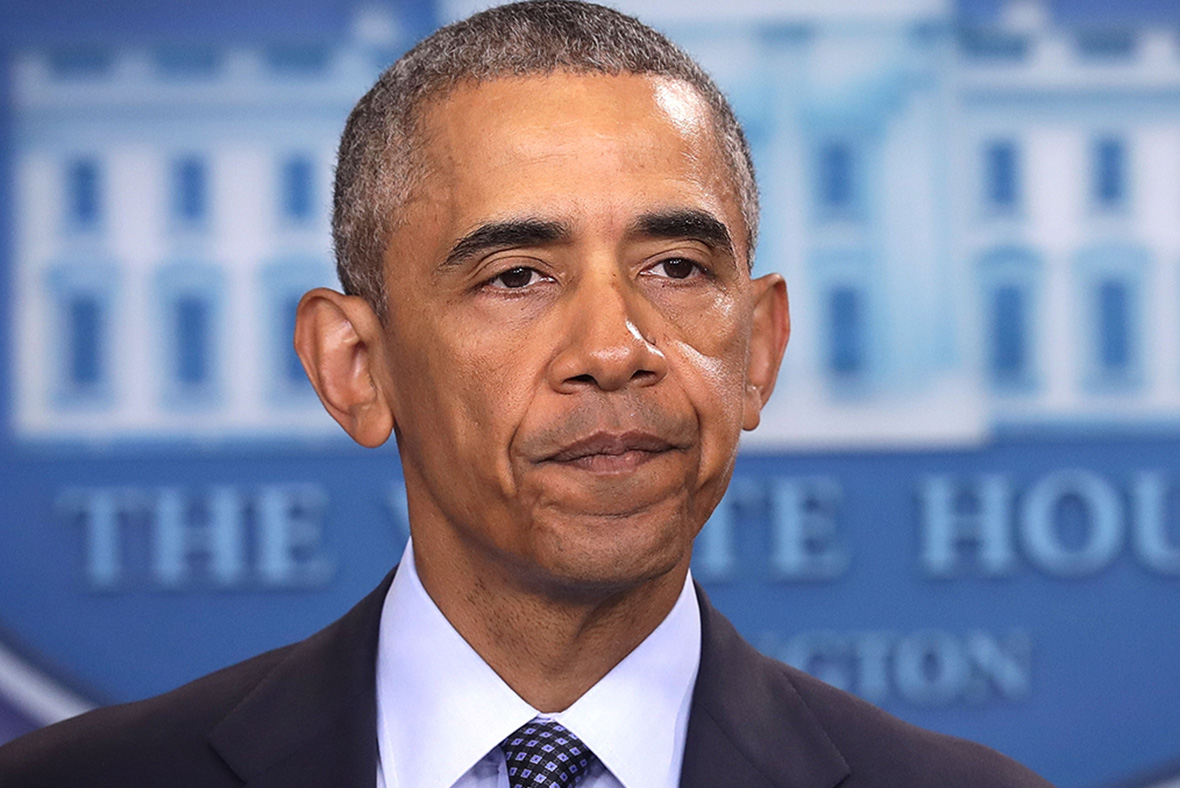
President Obama brands Donald Trump as 'dangerous' and 'un-American'
![]() |
Trump has also repeatedly bashed the president for his failure to use the exact phrase "radical Islamic terrorism."
Obama said that Trump's call for a ban on Muslim immigrants — plus any immigrants from world terror hotspots — and the wedge he drives between Americans makes the nation more dangerous, noted NBC.
"Where does this stop?" Obama asked in remarks in a speech delivered before members of the Treasury Department. "Are we going to start treating all Muslim Americans differently? Place them under special surveillance? Discriminate against them because of their faith? That's not the America we want. It doesn't reflect our ideals."
Obama warned that if the US abandons its core values of tolerance, "we would not only make it a lot easier to radicalise people here and around the world, but we would have betrayed the very things we are trying to protect."
He hammered Trump over his "dangerous" mindset and "loose talk and sloppiness," and indicated that Trump's remarks were driving Muslims, who might be vulnerable to radicalisation, into the arms of the Islamic State (Isis).
"If we fall into the trap of painting all Muslims with a broad brush we are doing the terrorists' work for them," Obama said. And he finally let Trump have a sucker punch, over the candidate's insistence that Obama use the phrase "radical Islamic terrorism."
"What exactly would using this label accomplish? What exactly would it change?" Obama asked. "Would it make ISIL less committed to try and kill Americans?" he continued, using a different acronym for ISIS.
"Would it bring in more allies? Is there a military strategy that is served by this? The answer is none of the above," he said. "Calling a threat by a different name does not make it go away."
He added: "There's no magic to the phrase radical Islam. It's a political talking point. The reason I am careful has nothing to do with political correctness and everything to do with defeating extremism."
Trump was roundly criticised by many after he accepted "congratulations" for being "right" about terrorism in the wake of the Orland massacre. Many in the GOP leadership have remained silent on his remarks — or criticised them, reports NBC.
"I'm not hopeful right now," said Arizona's Republican Senator Jeff Flake, who has refused to endorse Trump. Trump's "ill-informed, ill-conceived ban on Muslims" is damaging the Republican Party, he said.
Trump's statement after the Orlando massacre "wasn't the kind of response that I would expect when 50 people have perished," said Tennessee Republican Senator Bob Corker. "I've offered words of public encouragement [to Trump] in important times and continue to be discouraged by the results."
Wednesday, 15 June 2016
Bodies of 42 fishermen butchered by Boko Haram pulled from Lake Chad
"Cameroonian sailors and villagers... saw several bodies
floating on the water and immediately alerted security forces," Cololenl
Nomo Jean Claude told the African news website the Daily Sabah.
"We recovered 42 bodies from the water between Saturday and Sunday.
After identification, we found they were of Cameroonian, Nigerian and
Chadian nationality. The bodies were immediately handed over to the
families for burial."
Boko Haram
has fought a seven-year battle to form an Islamist caliphate in the
region in which around 20,000 people have been killed and 2.7 million
people displaced. Around 50,000 have been displaced in south eastern Niger in the last few days due to an onslaught by the group, according to Fox News.
This has prompted a doubling of food aid to southern Niger, the United Nations' World Food Program (WFP) announced on Tuesday (14 June). "Many people have walked from 10 km to 40 kms (6 to 25 miles)," said WFP Niger deputy country director Belkacem Machane in a statement published by Reuters.
"They
are arriving in a state of shock, and urgently need food, shelter,
water – assistance with their most basic needs. They have now reached
the end of their rope."
Niger, Chad, Benin and Cameroon have all joined an international task-force to fight the insurgents, but often ordinary civilians are the ones who suffer most. BokoHaram has bombed many mosques, transport hubs and even refugee centres, as well as snatching over 200 schoolgirls from Chibok and selling them into slavery.
In March (2016) Cameroon announced the death penalty for 89 members of Boko Haram, a decision dismissed as counter-productive by anti-terrorism experts.
UNN, Enugu Campus shut down over students’ violent protest
University of Nigeria, Enugu Campus, UNEC, has been shut down indefinitely following students’ unrest in the institution. UNN It was gathered that students of the university staged a protest last Monday over epileptic power supply in the campus and in the process, destroyed cars, water tanks and street lights before police fired teargas to stop them. Further checks revealed that the crisis that culminated in the closure of the campus began over a week ago when the Students’ Union Government locked up the classes, insisting that classes should not continue until the authorities fixed the electricity generator in the campus. But calm seemed to return in the campus after meetings with the Deputy Vice-Chancellor, Professor Smart Uchegbu. An agreement that classes should be opened was reached which they did on Monday. However, the generator was unstable when it was switched on Monday, which led to the protests. In a memorandum issued on June 14, 2016 and signed by the Deputy Vice Chancellor, Enugu Campus, Professor Smart Uchegbu, the university authority stated, “This is to bring to the notice of the university community that in the light of the violent protest and monumental destruction of properties on 13th June, 2016, the Vice Chancellor has approved the implementation of immediate suspension of the Enugu campus students union government and closure of the University of Nigeria, Enugu Campus indefinitely”Very hot drinks are 'probably carcinogenic
(CNN)Anyone
who likes to curl up with a steaming hot drink should consider letting
some of that warmth subside; drinking it could increase their risk of
developing cancer.
In a review published today by the International Agency for Research on Cancer,
the cancer agency of the World Health Organization, drinking very hot
beverages was classified as "probably carcinogenic to humans."
More
specifically, the review by a panel of global experts stated that
drinking beverages at temperatures above 65 degrees Celsius -- 149
degrees Fahrenheit -- could cause people to develop cancer of their
esophagus, the eighth most common form of cancer worldwide. Drinking
tea, coffee or other hot beverages at this temperature can cause
significant scald burns in the esophagus when they're consumed and has previously been linked to an increased cancer risk in this part of the body.
Warm
beverages are not typically consumed this hot in Europe and North
America but are commonly served at, or above, this temperature in
regions such as South America, the Middle East and East Africa --
particularly when drinking teas. It's hotter than water coming out of
sink faucets, which is typically no higher than about 140 degrees
Fahrenheit (60 degrees Celsius), but not as hot as boiling water. Water
boils at 100 degrees Celsius, or 212 degrees Fahrenheit.
The 65-degree Celsius temperature noted by the cancer research agency is enough to burn your tongue, and and according to the American Burn Association, skin contact with a liquid this hot can result in almost instantaneous burns if prolonged.
Getting hot
The
findings come after a group of 23 international scientists analyzed all
available data on the carcinogenicity of coffee, maté -- a leaf
infusion consumed commonly in South America and other regions -- and a
range of other hot beverages, including tea. They decided that drinks
consumed at very hot temperatures were linked to cancer of the esophagus
in humans.
The new classification puts consuming very hot drinks in the same risk group as exposure to substances such as lead, gasoline and exhaust fumes, which are also classified as "possibly carcinogenic" by the agency. Use of talcum powder on the perineal or anal regions of the body is also within this category.
Evidence
for the findings was limited, but studies in China, Iran, Turkey and
South America found positive associations between the risk of this form
of cancer and temperatures at which drinks were consumed. Forms of tea,
including the leaf infusion maté, are typically drunk at extremely high
temperatures, above 158 degrees Fahrenheit (70 degrees Celsius) in these
regions, according to the agency.
"These
results suggest that drinking very hot beverages is one probable cause
of esophageal cancer and that it is the temperature, rather than the
drinks themselves, that appears to be responsible," said Dr. Christopher
Wild, director of the International Agency for Research on Cancer.
Consumers
in industrialized countries can stay calm, as they typically drink
their beverages with less heat. "This is about 10 degrees [Celsius]
higher than people in North America [and Europe] like their coffee,"
said Dana Loomis, deputy head of the monographs section at the cancer research agency that led the review.
Individually,
coffee and maté did not have conclusive evidence for any cancer-causing
effects when served at cool or warm temperatures, meaning the drinks
themselves were not classified as carcinogenic.
Esophageal cancer was responsible for approximately 400,000 recorded deaths worldwide in 2012, about 5% of all cancer deaths.
Though
smoking and drinking alcohol are major causes of esophageal cancer,
particularly in high-income countries, the majority of cases globally
for this form of cancer occur in parts of Asia, South America and East
Africa.
"[Here], drinking very hot
beverages is common, and the reasons for this high incidence of this
cancer are not well-understood," Wild said.
The
Tea Advisory Panel in the United Kingdom has responded to the
classification by highlighting that tea is drunk at lower temperatures
in the UK and that most people add milk.
"Tea
drinkers in the UK can continue to enjoy tea in the traditional way
with a drop of milk, which ensures that the temperature of tea sits
within safe limits," said the panel's Tim Bond. "A study by UK burns doctors found that a cup of tea with 10 milliliters of milk cooled to less than 65 degrees Celsius within five minutes."
Re-classifying coffee
The
International Agency for Research on Cancer classified coffee as
"possibly carcinogenic to humans" in 1991, based on limited evidence,
but the increased number of studies and evidence available since then
led to its re-evaluation during the review.
The
group analyzed more than 1,000 studies and decided there was inadequate
evidence for any cancer-causing effects linked to drinking coffee
itself, away from the temperature at which it is served.
The report stated coffee was "not classifiable as to its carcinogenicity to humans."
"Many
epidemiological studies showed that coffee drinking had no carcinogenic
effects for cancers of the pancreas, female breast and prostate, and
reduced risks were seen for cancers of the liver and uterine
endometrium," the report said.
Evidence for any other cancers linked to drinking coffee was also inconclusive.
The
National Coffee Association in the United States welcomed the new
classification. "This is great news for coffee drinkers and confirms
evidence from an avalanche of studies by highly respected and
independent scientists," said National Coffee Association President Bill
Murray. "Today, we can brew or buy a cup with even more confidence
thanks to science."
The heat emanating from a coffee cup, or any hot drink, remains a risk, and previous studies have suggested an optimal drinking temperature of 136 degrees Fahrenheit (57.8 degrees Celsius) or below.
Consuming cancer
The findings come after a string of similar reports that link food and drink to cancer.
A 2015 study
found that only 10% to 30% of cancers occur naturally in people's
bodies, suggesting that most cancers are, in fact, a result of
environmental factors.
In October, the WHO announced results from a report that linked people eating processed meat,
such as sausages and ham, to cancer. Based on evidence from hundreds of
studies, processed meat was classified as carcinogenic to humans.
Unprocessed red meat was classified as probably carcinogenic.
Recent studies have linked Western diets with increased risk of colon and prostate cancer. Men eating mostly a Western diet were found to have 2.5 times the risk of
dying from prostate cancer. A Western diet is typically considered to
be low in fiber and high in refined sugars, saturated fats and animal
protein.
This week, the Environmental Working Group
released findings that more than 400 known cancer-causing chemicals
have been found in the bodies of Americans during research studies.
Join the conversation
After
a review of more than 1,000 biomonitoring studies, the group found that
up to 420 chemicals known or likely to cause cancer have been detected
in blood, urine, hair and other human samples. Nine of these was
identified to be above safety limits assigned by the U.S. Environmental
Protection Agency and posing non-trivial cancer risks in most Americans, according to the review.
"The
presence of a toxic chemical in our bodies does not necessarily mean it
will cause harm, but this report details the astounding number of
carcinogens we are exposed to in almost every part of life that are
building up in our systems," said Curt DellaValle, a senior scientist at
the Environmental Working Group and author of the report. "At any given
time, some people may harbor dozens or hundreds of cancer-causing
chemicals. This troubling truth underscores the need for greater
awareness of our everyday exposure to chemicals and how to avoid them."
Breaking: Finally, CBN to floats the Naira
By Emma Ujah, Abuja Bureau Chief
The Central Bank of Nigeria (CBN) Wednesday announced what it termed the “automatic adjustment mechanism of the exchange rate” in a flexible foreign exchange regime aimed at reducing the pressure on the Naira.
CBN has been under immense pressure to devalue the Naira for a while, which has been resisted by both the monetary and fiscal authorities, claiming that past devaluations did not benefit the economy- which is import dependent. Mr. Emefiele said, “The Central Bank of Nigeria has always maintained that it would continue to monitor situations on the ground and ensure that the Bank’s policies reflect these facts and developments rather than the sentiments of any groups or sectors.
“It is in light of this principle that we now believe that the time is right to restore the automatic adjustment mechanism of the exchange rate with the re-introduction of a flexible inter-bank exchange rate market. “The workings of this market will be consistent with the Bank’s objectives of enhancing efficiency and facilitating a liquid and transparent Foreign Exchange Market. Highlights of the flexible regime Under the new regime, Governor Enefiele said that the market would operate as a single market structure through the inter-bank/autonomous window Below are the highlights of the new regime: *The Exchange Rate would be purely market-driven using the Thomson-Reuters Order Matching System as well as the Conversational Dealing Book. *The CBN would participate in the Market through periodic interventions to either buy or sell FX as the need arises. *To improve the dynamics of the market, we will introduce FX Primary Dealers (FXPD) who would be registered by the CBN to deal directly with the Bank for large trade sizes on a two-way quotes basis. *These Primary Dealers shall operate with other dealers in the Inter-bank market, amongst other obligations that will be stipulated in the Foreign Exchange Primary Dealers (FXPD) Guidelines, which would also be released immediately after this Press Briefing. *There shall be no predetermined spread on FX spot transactions executed through the CBN intervention with Primary Dealers, while all FX Spot purchased by Authorized Dealers are transferable in the inter-bank FX Market. *The Forty-One (41) items classified as “Not Valid for Foreign Exchange” as detailed in a previous CBN Circular shall remain inadmissible in the Nigerian FX market. *To enhance liquidity in the market, the CBN may also offer long-tenored FX Forwards of 6 to 12 months or any tenor to Authorized Dealers In addition: *Sale of FX Forwards by Authorized Dealers to end-users must be trade-backed, with no predetermined spreads; *The CBN shall introduce non-deliverable over-the-counter (OTC) Naira-settled Futures, with daily rates on the CBN-approved FMDQ Trading and Reporting System. This is an entirely new product in the Nigerian Foreign Exchange Market, which would help moderate volatility in the exchange rate by moving non-urgent FX demand from the Spot to the Futures market; *The OTC FX Futures shall be in non-standardized amounts and different fixed tenors, which may be sold on any dates thereby ensuring bespoke maturity dates; *Proceeds of Foreign Investment Inflows and International Money Transfers shall be purchased by Authorized Dealers at the Daily Inter-Bank Rate; and *Non-oil exporters are now allowed unfettered access to their FX proceeds, which shall be sold in the Inter-bank market. Timelines *Selected FX Primary Dealers would be notified by Friday 17th June 2016. All other non-Primary Dealers would remain valid and eligible to participate in the market *Inter-bank trading under the new guidelines will begin on Monday 20th June 2016; and *The tenors and rates for the OTC Naira-settled FX Futures will be announced on Monday, June 27, 2016. Depleted foreign reserves The CBN, the governor said, had to take the measures sine the nation “witnessed a significant decline in our Foreign Exchange Reserves from about US$42.8 billion in January 2014 to about US$26.7 billion as of 10th June 2016. “In terms of inflows, the Bank’s foreign exchange earnings have fallen from about US$3.2 billion monthly to current levels of below a billion dollars per month.” He blamed the poor foreign exchange receipts on the over 70 percent drop in the price of crude oil, which contributes the largest share of our Foreign Exchange Reserves; Global growth slowdown and geopolitical tensions along critical trading routes in the world; and Normalization of Monetary Policy by the United States’ Federal Reserve. The CBN boss explained, “the interplay between reduced FX Supply and rising FX demand accounted for a substantial reduction in our foreign exchange reserves.” Mr. Emefiele, assured, however, that “Our Reserves, despite having fallen, is still robust and is able to cover about 5 months of Nigeria’s imports as against the international benchmark of 3 months.” He said that his team at the CBN would ensure transparency in the new regime and that there would be no place for speculators. His words, “Let me note that the Central Bank is strongly determined to make this market as transparent, liquid, and efficient as possible. Therefore, we would neither tolerate unscrupulous behaviour nor hesitate to bring serious sanctions on offenders. “The CBN expects all authorized dealers particularly to display the highest level of professionalism. We expect them to understand the spirit and letter of this transition to a market based system. The CBN will not allow the system to be undermined by speculators and rent-seekers. *Permit me to emphasize that any attempt to breach any aspect of this new framework will be heavily sanctioned by the CBN and this may indeed result in the suspension or withdrawal of the FX dealing license of an offending Authorized dealer.” The governor explained that the Primary Dealers would be about eight or ten and banks with the capacity to go to the market with as much as $10 million.
“It is in light of this
principle that we now believe that the time is right to restore the
automatic adjustment mechanism of the exchange rate with the
re-introduction of a flexible inter-bank exchange rate market.
“The workings of this market will be consistent with the Bank’s
objectives of enhancing efficiency and facilitating a liquid and
transparent Foreign Exchange Market.
Highlights of the flexible regime
Under the new regime, Governor Enefiele said that the market would
operate as a single market structure through the inter-bank/autonomous
window
Below are the highlights of the new regime:
*The Exchange Rate would be purely market-driven using the
Thomson-Reuters Order Matching System as well as the Conversational
Dealing Book.
*The CBN would participate in the Market through periodic interventions
to either buy or sell FX as the need arises.
*To improve the dynamics of the market, we will introduce FX Primary
Dealers (FXPD) who would be registered by the CBN to deal directly with
the Bank for large trade sizes on a two-way quotes basis.
*These Primary Dealers shall operate with other dealers in the
Inter-bank market, amongst other obligations that will be stipulated in
the Foreign Exchange Primary Dealers (FXPD) Guidelines, which would also
be released immediately after this Press Briefing.
*There shall be no predetermined spread on FX spot transactions executed
through the CBN intervention with Primary Dealers, while all FX Spot
purchased by Authorized Dealers are transferable in the inter-bank FX
Market.
*The Forty-One (41) items classified as “Not Valid for Foreign Exchange”
as detailed in a previous CBN Circular shall remain inadmissible in the
Nigerian FX market.
*To enhance liquidity in the market, the CBN may also offer long-tenored
FX Forwards of 6 to 12 months or any tenor to Authorized Dealers
In addition:
*Sale of FX Forwards by Authorized Dealers to end-users must be
trade-backed, with no predetermined spreads;
*The CBN shall introduce non-deliverable over-the-counter (OTC)
Naira-settled Futures, with daily rates on the CBN-approved FMDQ Trading
and Reporting System. This is an entirely new product in the Nigerian
Foreign Exchange Market, which would help moderate volatility in the
exchange rate by moving non-urgent FX demand from the Spot to the
Futures market;
*The OTC FX Futures shall be in non-standardized amounts and different
fixed tenors, which may be sold on any dates thereby ensuring bespoke
maturity dates;
*Proceeds of Foreign Investment Inflows and International Money
Transfers shall be purchased by Authorized Dealers at the Daily
Inter-Bank Rate; and
*Non-oil exporters are now allowed unfettered access to their FX
proceeds, which shall be sold in the Inter-bank market.
Timelines
*Selected FX Primary Dealers would be notified by Friday 17th June 2016.
All other non-Primary Dealers would remain valid and eligible to
participate in the market
*Inter-bank trading under the new guidelines will begin on Monday 20th
June 2016; and
*The tenors and rates for the OTC Naira-settled FX Futures will be
announced on Monday, June 27, 2016.
Depleted foreign reserves
The CBN, the governor said, had to take the measures sine the nation
“witnessed a significant decline in our Foreign Exchange Reserves from
about US$42.8 billion in January 2014 to about US$26.7 billion as of
10th June 2016.
“In terms of inflows, the Bank’s foreign exchange earnings have fallen
from about US$3.2 billion monthly to current levels of below a billion
dollars per month.”
He blamed the poor foreign exchange receipts on the over 70 percent drop
in the price of crude oil, which contributes the largest share of our
Foreign Exchange Reserves; Global growth slowdown and geopolitical
tensions along critical trading routes in the world; and Normalization
of Monetary Policy by the United States’ Federal Reserve.
The CBN boss explained, “the interplay between reduced FX Supply and
rising FX demand accounted for a substantial reduction in our foreign
exchange reserves.”
Mr. Emefiele, assured, however, that “Our Reserves, despite having
fallen, is still robust and is able to cover about 5 months of Nigeria’s
imports as against the international benchmark of 3 months.”
He said that his team at the CBN would ensure transparency in the new
regime and that there would be no place for speculators.
His words, “Let me note that the Central Bank is strongly determined to
make this market as transparent, liquid, and efficient as possible.
Therefore, we would neither tolerate unscrupulous behaviour nor hesitate
to bring serious sanctions on offenders.
“The CBN expects all authorized dealers particularly to display the
highest level of professionalism. We expect them to understand the
spirit and letter of this transition to a market based system. The CBN
will not allow the system to be undermined by speculators and
rent-seekers.
*Permit me to emphasize that any attempt to breach any aspect of this
new framework will be heavily sanctioned by the CBN and this may indeed
result in the suspension or withdrawal of the FX dealing license of an
offending Authorized dealer.”
The governor explained that the Primary Dealers would be about eight or
ten and banks with the capacity to go to the market with as much as $10
million.
Read more at: http://www.vanguardngr.com/2016/06/breaking-finally-cbn-floats-the-naira/
CBN has been under
immense pressure to devalue the Naira for a while, which has been
resisted by both the monetary and fiscal authorities, claiming that past
devaluations did not benefit the economy- which is import dependent.
Mr. Emefiele said, “The Central Bank of Nigeria has always maintained
that it would continue to monitor situations on the ground and ensure
that the Bank’s policies reflect these facts and developments rather
than the sentiments of any groups or sectors.
Read more at: http://www.vanguardngr.com/2016/06/breaking-finally-cbn-floats-the-naira/
The Central Bank of
Nigeria (CBN) Wednesday announced what it termed the “automatic
adjustment mechanism of the exchange rate” in a flexible foreign
exchange regime aimed at reducing the pressure on the Naira.
Read more at: http://www.vanguardngr.com/2016/06/breaking-finally-cbn-floats-the-naira/
Mr Peter Okoye Our Brand Ambassador."KIA "
Peter Okoye of PSquare AKA MrP is the brand ambassador for Kia Motors in
Nigeria. Their campaign is all about #StyleMeetsAttitude , and he
definitely fits the bill. Congrats on your new ‘testimony’
Breaking: Finally, CBN to floats the Naira
Breaking: Finally, CBN floats the Naira
Read more at: http://www.vanguardngr.com/2016/06/breaking-finally-cbn-floats-the-naira/
By Emma Ujah, Abuja
Bureau Chief
The Central Bank of Nigeria (CBN) Wednesday announced what it termed the
“automatic adjustment mechanism of the exchange rate” in a flexible
foreign exchange regime aimed at reducing the pressure on the Naira.
CBN has been under immense pressure to devalue the Naira for a while,
which has been resisted by both the monetary and fiscal authorities,
claiming that past devaluations did not benefit the economy- which is
import dependent.
Mr. Emefiele said, “The Central Bank of Nigeria has always maintained
that it would continue to monitor situations on the ground and ensure
that the Bank’s policies reflect these facts and developments rather
than the sentiments of any groups or sectors.
Governor, Central Bank of Nigeria (CBN), Mr Godwin EmefieleGovernor,
Central Bank of Nigeria (CBN), Mr Godwin Emefiele
“It is in light of this principle that we now believe that the time is
right to restore the automatic adjustment mechanism of the exchange rate
with the re-introduction of a flexible inter-bank exchange rate market.
“The workings of this market will be consistent with the Bank’s
objectives of enhancing efficiency and facilitating a liquid and
transparent Foreign Exchange Market.
Highlights of the flexible regime
Under the new regime, Governor Enefiele said that the market would
operate as a single market structure through the inter-bank/autonomous
window
Below are the highlights of the new regime:
*The Exchange Rate would be purely market-driven using the
Thomson-Reuters Order Matching System as well as the Conversational
Dealing Book.
*The CBN would participate in the Market through periodic interventions
to either buy or sell FX as the need arises.
*To improve the dynamics of the market, we will introduce FX Primary
Dealers (FXPD) who would be registered by the CBN to deal directly with
the Bank for large trade sizes on a two-way quotes basis.
*These Primary Dealers shall operate with other dealers in the
Inter-bank market, amongst other obligations that will be stipulated in
the Foreign Exchange Primary Dealers (FXPD) Guidelines, which would also
be released immediately after this Press Briefing.
*There shall be no predetermined spread on FX spot transactions executed
through the CBN intervention with Primary Dealers, while all FX Spot
purchased by Authorized Dealers are transferable in the inter-bank FX
Market.
*The Forty-One (41) items classified as “Not Valid for Foreign Exchange”
as detailed in a previous CBN Circular shall remain inadmissible in the
Nigerian FX market.
*To enhance liquidity in the market, the CBN may also offer long-tenored
FX Forwards of 6 to 12 months or any tenor to Authorized Dealers
In addition:
*Sale of FX Forwards by Authorized Dealers to end-users must be
trade-backed, with no predetermined spreads;
*The CBN shall introduce non-deliverable over-the-counter (OTC)
Naira-settled Futures, with daily rates on the CBN-approved FMDQ Trading
and Reporting System. This is an entirely new product in the Nigerian
Foreign Exchange Market, which would help moderate volatility in the
exchange rate by moving non-urgent FX demand from the Spot to the
Futures market;
*The OTC FX Futures shall be in non-standardized amounts and different
fixed tenors, which may be sold on any dates thereby ensuring bespoke
maturity dates;
*Proceeds of Foreign Investment Inflows and International Money
Transfers shall be purchased by Authorized Dealers at the Daily
Inter-Bank Rate; and
*Non-oil exporters are now allowed unfettered access to their FX
proceeds, which shall be sold in the Inter-bank market.
Timelines
*Selected FX Primary Dealers would be notified by Friday 17th June 2016.
All other non-Primary Dealers would remain valid and eligible to
participate in the market
*Inter-bank trading under the new guidelines will begin on Monday 20th
June 2016; and
*The tenors and rates for the OTC Naira-settled FX Futures will be
announced on Monday, June 27, 2016.
Depleted foreign reserves
The CBN, the governor said, had to take the measures sine the nation
“witnessed a significant decline in our Foreign Exchange Reserves from
about US$42.8 billion in January 2014 to about US$26.7 billion as of
10th June 2016.
“In terms of inflows, the Bank’s foreign exchange earnings have fallen
from about US$3.2 billion monthly to current levels of below a billion
dollars per month.”
He blamed the poor foreign exchange receipts on the over 70 percent drop
in the price of crude oil, which contributes the largest share of our
Foreign Exchange Reserves; Global growth slowdown and geopolitical
tensions along critical trading routes in the world; and Normalization
of Monetary Policy by the United States’ Federal Reserve.
The CBN boss explained, “the interplay between reduced FX Supply and
rising FX demand accounted for a substantial reduction in our foreign
exchange reserves.”
Mr. Emefiele, assured, however, that “Our Reserves, despite having
fallen, is still robust and is able to cover about 5 months of Nigeria’s
imports as against the international benchmark of 3 months.”
He said that his team at the CBN would ensure transparency in the new
regime and that there would be no place for speculators.
His words, “Let me note that the Central Bank is strongly determined to
make this market as transparent, liquid, and efficient as possible.
Therefore, we would neither tolerate unscrupulous behaviour nor hesitate
to bring serious sanctions on offenders.
“The CBN expects all authorized dealers particularly to display the
highest level of professionalism. We expect them to understand the
spirit and letter of this transition to a market based system. The CBN
will not allow the system to be undermined by speculators and
rent-seekers.
*Permit me to emphasize that any attempt to breach any aspect of this
new framework will be heavily sanctioned by the CBN and this may indeed
result in the suspension or withdrawal of the FX dealing license of an
offending Authorized dealer.”
The governor explained that the Primary Dealers would be about eight or
ten and banks with the capacity to go to the market with as much as $10
million.
Read more at: http://www.vanguardngr.com/2016/06/breaking-finally-cbn-floats-the-naira/
STEPHEN KESHI'S CHILDREN ARRIVED NIGERIA.
Stephen Jnr and Jennifer Keshi have arrived Nigeria for preparation
of their father, Stephen Keshi's burial. The former Super Eagles
Coach died in Edo state last week Wednesday June 8th. Stephen
Keshi Jnr says they are working with the Federal government, Delta
and Edo state government and other well meaning Nigerians to give
him a befitting burial. No date has been fixed for his burial.
23 CONDITION TO ACCESS 90 BILLION " FG"
Following the economic turmoil Nigeria is currently going
through, the Federal Government (FG) has once again, made
moves to rescue state governments who have been hit by the
crisis.
Last year, the state governments received N713.7billion bailout
from the FG to pay workers backlog of salaries, but they are still
grappling with the same challenges due to Nigeria’s dwindling
oil revenues.
The FG has now decided to give out another N90 billion loan,
which the government believes will help the states in their bid to
be less dependent on the monthly handout from the federation
account.
President Buhari and his team are using every means possible
to ensure that the Nigerian economy does not collapse
The loan will be given over one year and will be extended to the
states after they have met 22 conditions.
Read the conditions below:
1. Publish audited annual financial statements within nine
months of financial year end.
2. Comply with the International Public Sector Accounting
Standards (IPSAS)
3. Publish state budget online annually
4. Publish budget implementation performance report online
quarterly
5. Develop standard IPSAS compliant software to be offered to
states for use by state and local governments
6. Set realistic and achievable targets to improve independently
generated revenue (from all revenue generating activities of the
state in addition to tax collections) and ratio of capital to
recurrent expenditure
7. Implement targets
8. Implement a centralised Treasury Single Account (TSA) in
each state
9. Have quarterly financial reconciliation meetings with federal
government to cover VAT, PAYE remittances, refunds on
government projects, Paris Club and other accounts
10. Share the database of companies within each state with the
Federal Inland Revenue service (FIRS). The objective is to
improve VAT and PAYE collection
11. Introduce a system to allow for the immediate issue of VAT/
WHT certificates on payment of invoices. Review all revenue
related laws and update obsolete rates/tariffs
12. Set limits on personnel expenditure as a share of total
budgeted expenditure
13. Biometric capture of all states’ civil servants will be carried
out to eliminate payroll fraud
14. Establish efficiency unit
15. Federal government online price guide to be made available
for use by states
16. Introduce a system of continuous audit (internal audit)
17. Create a fixed asset and liability register
18. Consider privatisation or concession of suitable State-owned
enterprises to improve efficiency and management
19. Establish a capital development fund to ring- fence capital
receipts and adopt accounting policies to ensure that capital
receipts are strictly applied to capital projects
20. Domesticate Fiscal Responsibility Act (FRA)
21. Attainment and maintenance of a credit rating by each state
of the federation
22. Federal government to encourage states to access funds
from the capital markets for bankable projects through issuance
of fast- track Municipal bond guidelines to support smaller
issuances and shorter tenures
23. Comply with the FRA and reporting obligations, including: No
commercial bank loans to be undertaken by States; Routine
submission of updated debt profile report to the DMO.
Speaking on the loan, minister of finance, Mrs Kemi Adeosun
said: “The amount of the loan is N50billion for three months to be
shared across the 36 states, including FCT and then N40billion for
nine months.
“The idea is to tie states over for a year so that they rebalance,
which is an average of about N1.3billion per state for the first three
months and N1.1billion for the next nine months.
“It is a loan and it is fully repayable although it has a secured tie
against future dividends, revenues and any amount that government
might owe the states”.
Meanwhile, the federal government has barred banks in the
country from giving loans to state governments. The decision
was taken in line with the Fiscal Sustainability Plan (FSP) of the
government.
Monday, 6 June 2016
HOPE FOR COPPERS SERVING IN SOKOTO "GOVERNOR AMINU WAZIRI TAMBUWAL".
![]() |
| THAT GOOD FOR COPPERS |
The Sokoto state government has increased the allowances of
corps members serving in the state
– The increase affects all categories of youth corps members,
with graduates of major health courses getting more
– Aminu Tambuwal made the announcement during the
swearing-in ceremony of 2016 Batch A Stream II corps
members on Monday, June 13
The Sokoto state government has increased the allowances of
National Youth Service Corps (NYSC) members serving in the
state with a pledge to begin immediate payment of the new
payment structure.
Governor Aminu Waziri Tambuwal made the announcement of
the new policy during the swearing-in ceremony of 2016 Batch A
Stream II corps members at the state NYSC orientation camp in
Wamakko town, on Monday, June 13.
He said the state government appreciated the services of corps
members and the government would continue to make their
welfare a top priority.
Tambuwal said the increase affected all categories of youth
corps members, while graduates of major health courses would
get more.
members and the government would continue to make their
welfare a top priority.
Tambuwal said the increase affected all categories of youth
corps members, while graduates of major health courses would
get more.
He said: “Graduates of medicine will now be paid N50,000 from the
current amount of N36,000. Pharmacists will now N25,000 up from
the N19,000 obtainable in the past, while graduates of lab science
and other medical technicians like nurses are now entitled to
monthly stipend of N15,000, up from the current N9,000 they are
getting from the state government.
“In the same vein, graduates of social science and humanities will
now be paid N5,000 monthly, a one thousand addition from the
previous N4,000 they received from as state allawee.”
Governor Tambuwal urged the youth corps members to
reciprocate government gesture by being diligent in their areas
of primary assignments, adding that they should shun vices that
will lead to the breakdown of law and order and communal
harmony. Meanwhile, Daniel Oluwatobi, an ex-youth corps member who
lost his sight while serving as an Independent National Electoral
Commission (INEC) ad hoc staff for the 2011 elections has been
employed by the commission .
Oluwatobi who served in Yobe state, was said to have lost his sight while on election duty during the 2011 general elections.
Subscribe to:
Posts (Atom)